Physical therapy
We use analytics cookies to improve the site. You can accept or decline them. More in our privacy policy.
Cervicobrachial syndrome, or cervicobrachialgia, is a set of symptoms in which pain from the neck spreads towards the shoulder and arm. Different conditions can lie behind it — an injury, degenerative changes in the cervical spine or pressure on a nerve root. That is why we start with an examination, not with treatment.
Symptoms differ from person to person, both in which ones are present and in how severe they are. The most common are:
A definitive diagnosis means first seeing a doctor, who takes a detailed history and, where needed, refers you for:
A physiotherapist does not make the diagnosis. What we do before treatment is an assessment: a series of manual tests of muscles and movement, to see what is restricted and where the pain starts from.
As with other clinical presentations, cervicobrachialgia is treated either conservatively — with physical therapy and manual techniques — or surgically. The aim of conservative treatment is to relax the muscles and reduce the pain enough that, within a short time, the patient can do pain-free exercises that then maintain the result.
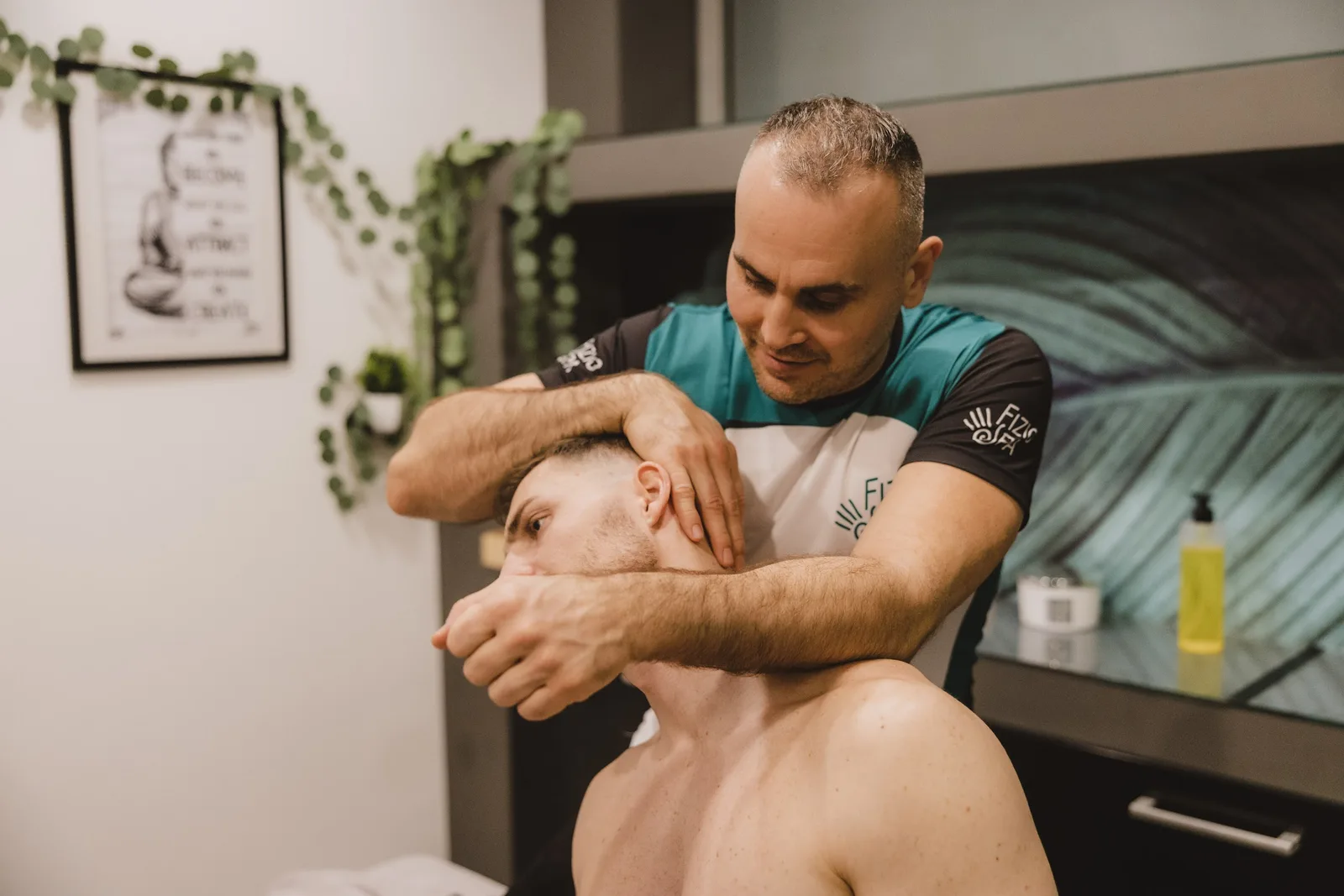
The techniques we use at Fizio Spa for this problem are dry needling to relax the muscles, cupping, chiropractic after a prior assessment, nerve and soft tissue mobilisation techniques, and therapeutic massage. At the end you get an exercise programme.
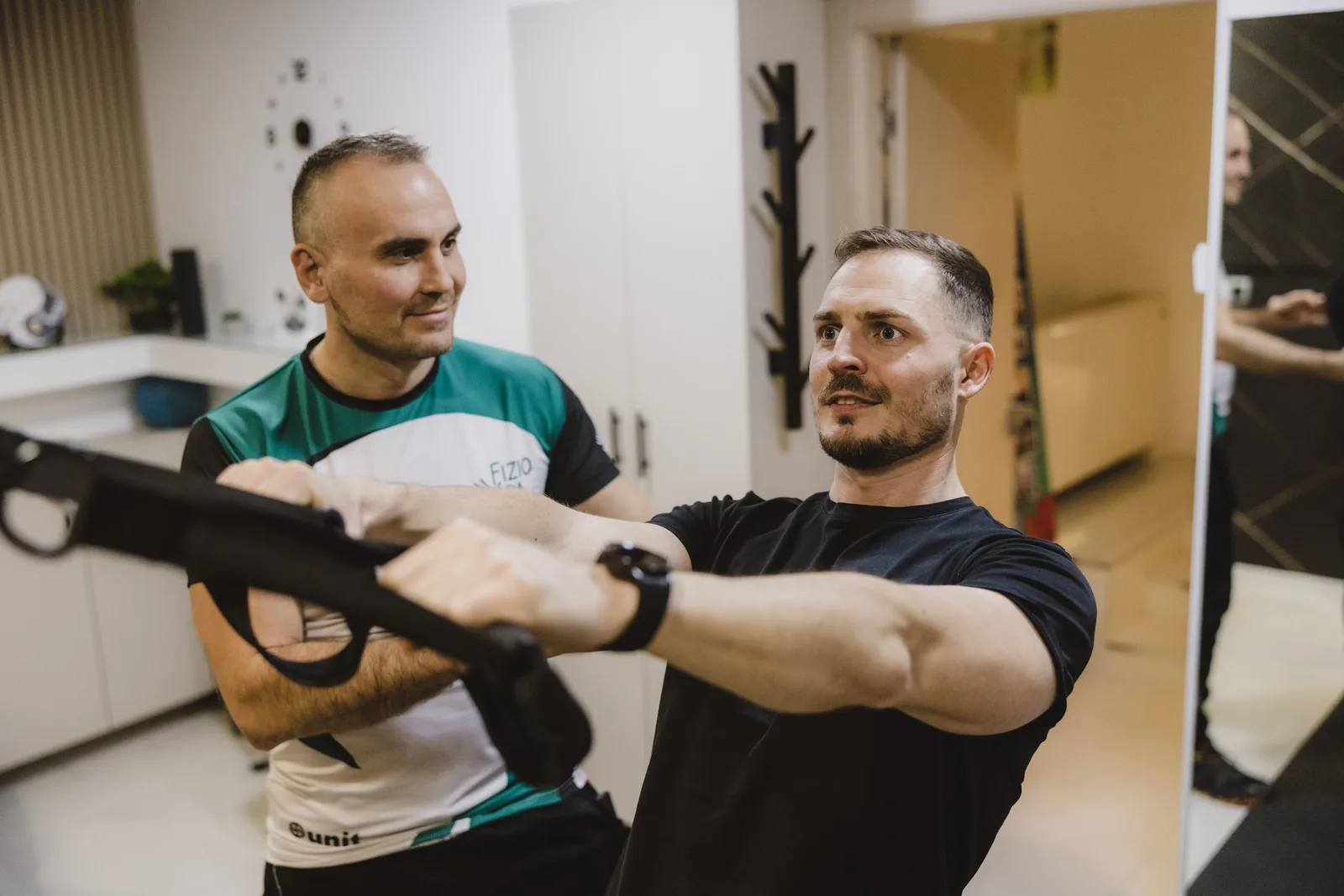
Exercise. Physical activity is one of the best measures for reducing the risk of repeat episodes. Exercise here does not mean hard training, if that has not been part of your life so far, but simple therapeutic exercises that activate and stretch the muscles of the neck and shoulders.
At the beginning you exercise under the supervision of a physiotherapist, so that you learn to perform the exercises correctly and without compensating with the neighbouring joints. After that you do them on your own.
A return of the pain can never be completely ruled out. What we see in practice is that, even when it does come back, the episodes are not as frequent as before the first course of rehabilitation and are usually milder. If the pain returns, the series of manual tests is repeated and rehabilitation begins again, as a rule shorter and easier than the first time.
Cervicobrachialgia can significantly affect quality of life, because of the pain and the limited mobility. A timely diagnosis and appropriate treatment are key. If you recognise these symptoms in yourself, see a specialist of your choice.
A set of symptoms in which pain from the neck spreads towards the shoulder and arm. The cause may be an injury, degenerative changes in the cervical spine or pressure on a nerve root.
Neck pain that spreads towards the shoulder and arm, tingling and numbness in the arm and fingers, weakness of the shoulder and arm muscles, and a limited range of neck movement.
The doctor takes a history and, where needed, refers you for an X-ray, an MRI or EMG/NCS. Before treatment, the physiotherapist carries out manual tests of muscles and movement.
It depends on the findings and on how long the condition has been present. The aim of the first appointments is to reduce the pain enough for you to be able to do the exercises, after which the programme continues at home.
Choose your time online, and you will get a confirmation by email straight away.
Book online