Sports topics
We use analytics cookies to improve the site. You can accept or decline them. More in our privacy policy.
Foam roller self-massage means rolling your muscles over a foam cylinder or a ball until you find a tight spot and then holding on it until it releases. Five to ten minutes after training or at the end of the day, at least three times a week, is enough. It does not replace massage, but between two treatments it keeps the muscles more supple and reduces stiffness.
Marko Ćurčić wrote this guide for the athletes and recreational exercisers he has guided through recovery, and we are publishing it here in an updated form. “It’s like having your own personal physiotherapist, completely free,” says Marko, adding that we are still not that scary when you need a proper massage.
Through pressure, the roller relaxes tight areas of muscle and fascia. Regular rolling helps you:
Simply rolling over a knot does not help; holding on it is what brings relief. For the first two weeks rolling can be quite uncomfortable, but with regular practice the pain quickly subsides.
Front of the thigh. If you have hip or knee pain, or you run or cycle, you need to roll this muscle group. Lie on your stomach, place your thigh on the roller just above the knee and rock back and forth. For more pressure, roll one leg at a time.
Back of the thigh. In people who sit for long periods it is often shortened and can pull on the pelvis and lower back. Sit on the roller just above the knees and slowly move it towards your seat. For more pressure, cross one leg over the other.
Outer thigh. Especially important for long-distance runners. Lie on your side on the roller, supporting yourself on your arms, and roll from the knee towards the hip. This area is more sensitive, so go slowly.
Inner thigh. If your knees cave inwards when you squat or run, the adductors are often tight and the glutes weak. Lie on your stomach, bring your bent knee out to the side over the roller and roll from the knee towards the groin.
Calf. A must for runners, cyclists and anyone who wears high heels. Place the roller under your calf; for more pressure, cross one leg over the other, and roll from the heel towards the knee. On a particularly tight spot, circle your foot about ten times.
Foot. Step on a tennis ball with your sole and roll it from heel to toes, with as much pressure as feels good. “Just three minutes at the end of a day on my feet gives me back that feeling of lightness,” says Marko.
With a desk job, the hips are bent for most of the day, and stiff hips can cause pain in the lower back and knees. For this region a ball works better than a roller: the smaller and harder it is, the deeper it works. Place it on the outside of the hip, slightly in front of your seat, and make circles.
For the glutes, sit on a tennis or lacrosse ball and roll around your buttocks. A tight piriformis muscle can mimic sciatica, so this rolling often brings relief. If pain shoots down your leg, read our guide on sciatica and come in for an assessment.
Upper back. Lie on your back with the roller under the middle of your back, arms crossed over your chest and your seat on the floor, and gently arch your upper back over the roller. Move the roller upwards, but never roll the lower back, as that causes excessive arching.
A trick from practice: tape two tennis balls together into a peanut shape. Your spine goes in the middle, and the balls work the muscles on both sides, from the lower back up to the neck.
Upper trapezius. Stand with your back against a wall, place the ball where the neck meets the shoulder, then slowly turn your body and guide it towards the shoulder and between the shoulder blades.
Shoulders and chest. Lie on your side with the ball under the outside of your shoulder and make circles. For the chest muscle, lie on your stomach with the ball under your collarbone and work towards the front of the shoulder and the armpit.
At least three times a week, for 5 to 10 minutes. Working with athletes, Marko has seen the quality of movement change noticeably after a month of regular rolling. The best time is the one you will actually use: after training, in the evening in front of the TV or before bed.
Do not roll over a fresh injury, bruise, swelling or varicose veins, or directly over bones and joints. If the pain increases rather than decreases after rolling, stop and see a physiotherapist. When you need more than self-massage, a sports massage goes deeper and works faster.
About 30 to 60 seconds per muscle group, holding for 20 to 30 seconds on each tight spot.
Mild discomfort on tight spots is normal, especially in the first two weeks. Sharp pain, shooting pain or pain that gets worse is not normal, and in that case you should stop.
Brief rolling before training helps you warm up, while longer rolling after training aids recovery. If you have to choose one, roll afterwards.
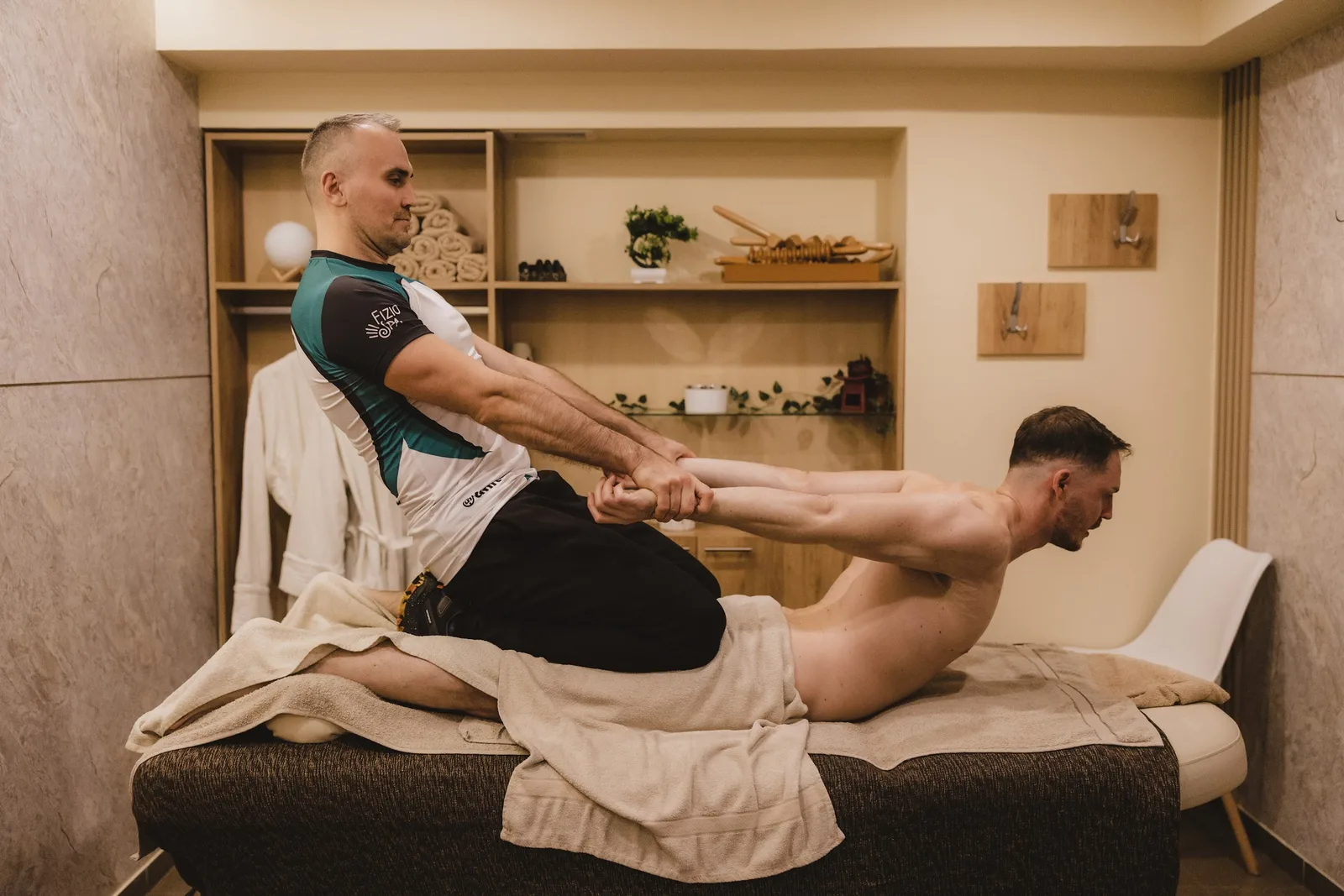
Not entirely. The roller maintains your muscles between treatments, while massage and a therapist work more deeply and precisely, especially with injuries.
Book a sports or therapeutic massage online, and you will get a confirmation by email straight away.
Book online