
Sports topics
We use analytics cookies to improve the site. You can accept or decline them. More in our privacy policy.
You train regularly, but your results have stalled? Your muscles are sore for days, fatigue is piling up and every workout feels harder than the last. Your body is telling you it needs recovery, because progress is not built on effort alone. Massage is one of the simplest ways to give your body back what training uses up.
Most progress happens between two workouts, while the body recovers. When training and massage are properly combined, muscles regenerate faster, hormones stabilise more easily, sleep deepens and mood settles. In this article you will see what happens in the body after training and when it makes sense to book a massage.
Every serious workout leaves its mark, and that is a good thing. During exercise, microscopic damage occurs in the muscle fibres. These micro-injuries signal the body to adapt and get stronger. They come with mild inflammation and a rise in stress hormones, above all cortisol.
Cortisol plays a dual role after training: on the one hand it helps the body cope with physical stress, but if it stays elevated for a long time it can slow recovery and affect sleep quality, mood and immunity.
This is where the nervous system comes in, more precisely the balance between its sympathetic (activation, effort) and parasympathetic (recovery, regeneration) branches. While the body is in “fight or flight” mode, regeneration is much slower. That is why rest alone is often not enough; recovery after exertion also needs concrete support.
Training uses the body up; massage helps it rebuild. By working more deeply on the muscle fibres, therapeutic massage for athletes relieves the feeling of tension and activates the parasympathetic nervous system, the part responsible for rest, recovery and hormonal balance.
After training, massage helps blood and lymph circulation the most. Better flow usually reduces the feeling of soreness and tightness, so pain subsides faster and strength returns sooner.
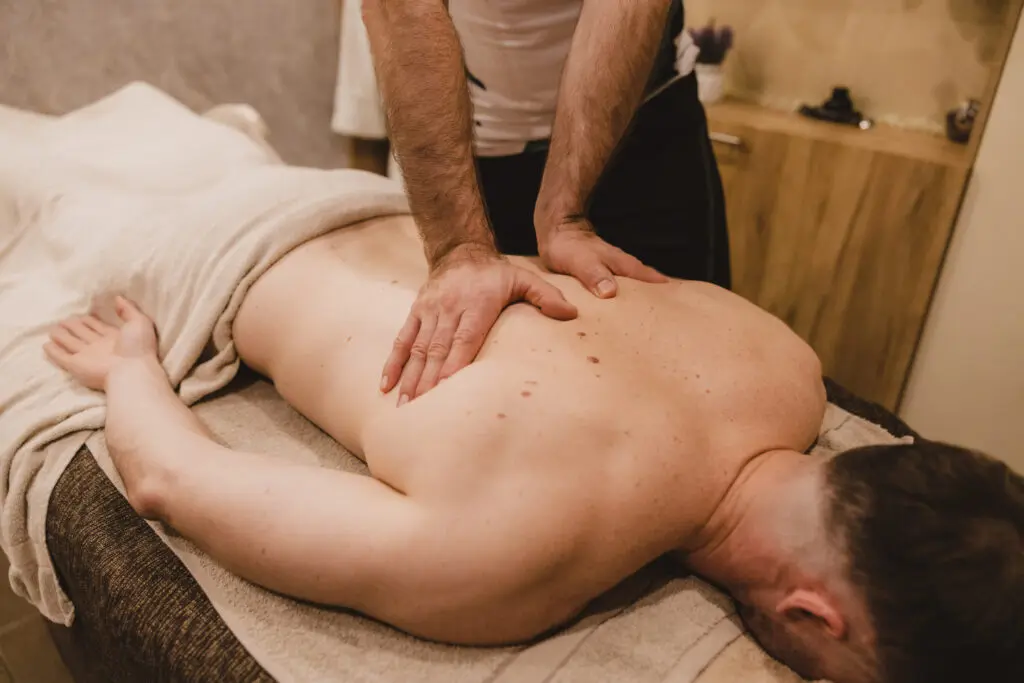
Besides relief, massage restores mobility and flexibility, and anyone who trains regularly really feels that. For such people, massage is not a luxury but part of recovery.
Training has a strong effect on the hormonal system, especially when it is intense. During exertion the body releases cortisol, the hormone that helps us withstand stress and effort. If recovery is missing, cortisol can stay elevated longer than it should, which usually means exhaustion, irritability and poorer sleep.
Massage pulls in the opposite direction. Regular treatments can lower cortisol levels and raise serotonin and oxytocin, the hormones responsible for feelings of calm, contentment and emotional balance.
When hormones naturally stabilise after training, sleep becomes deeper and of better quality. And it is precisely during sleep that most muscle regeneration takes place. That is why cortisol and stress are closely linked to health, but also to progress, because a body that does not sleep properly cannot recover properly either.
Massage feels good to almost everyone, but some people really need it. The combination of training and massage gives the most where the body is often on the edge between exertion and stress.
First on the list are athletes and recreational exercisers. Anyone who trains week after week must also recover at the same pace, for the sake of results, but also so that injuries and overtraining do not take hold.
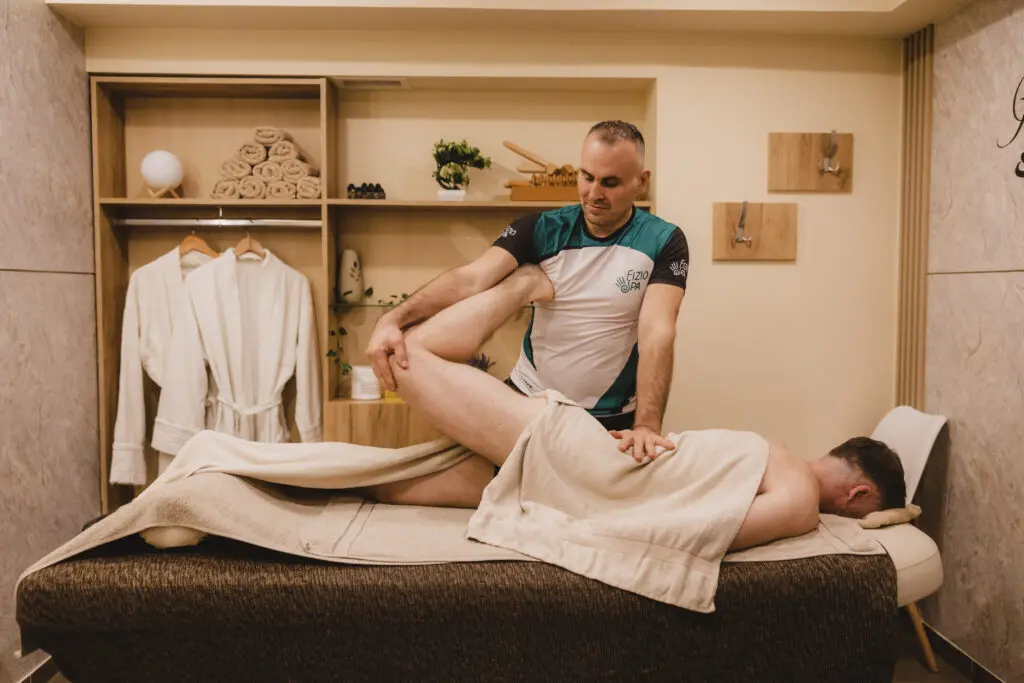
People under chronic stress, with insomnia or constant tension also have a lot to gain. Regular massage helps the body leave its constant “fight” mode and move into a state of rest and renewal.
Then there are those with tense shoulders, back pain or poorer circulation. For them, massage often brings more energy, easier movement and a feeling of having unloaded, both physically and mentally.
How your body reacts also depends on when you book your massage and which type you choose. It is worth fitting it into your routine rather than leaving it to chance.
For most people, a massage 6 to 24 hours after training works best, especially after demanding strength workouts. This gives the muscles time to settle down naturally, and the massage then gives recovery an extra push, eases soreness and brings back a feeling of lightness.
Before training, light massage, mobilisation and stretching make sense, to loosen the muscles and prepare them for exertion. These techniques do not go deep into the tissue; they serve mobility and better body control.
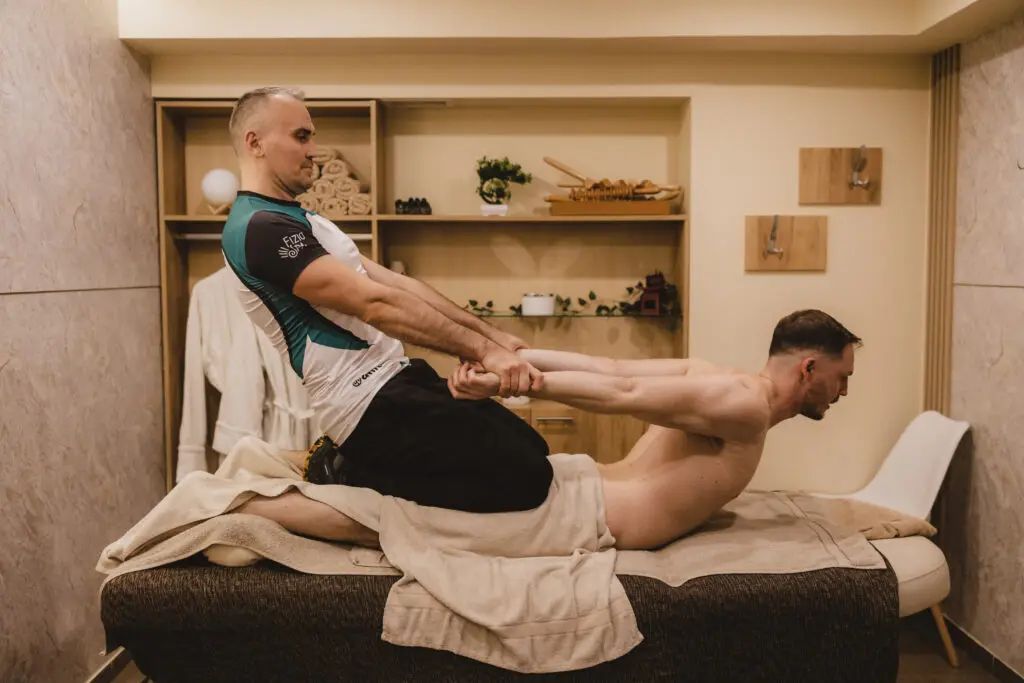
Most people do well with a relaxing or therapeutic massage once a week or twice a month, depending on their level of activity, stress and the body’s needs. Regularity pays off. Massage gives the most when it is part of your routine, not “first aid” once the pain has already arrived.
Training without recovery is like an engine without oil: it can run for a while, but it risks serious damage.
Training and massage complement each other. One uses the body up, the other gives back, so with both you recover faster, sleep better and keep your hormones in balance more easily. Progress comes when you listen to your body and give it time to recover.
If you would like to add massage to your recovery, our therapists will suggest the type and frequency of treatment based on your activity level and goals. Take a look at our massage offer or get in touch, and we will be happy to advise you.
Book a therapeutic or sports massage online and receive confirmation by email straight away.
Book online