Sports topics
We use analytics cookies to improve the site. You can accept or decline them. More in our privacy policy.
Running is one of the simplest ways to improve your fitness, mood and heart health, and all you need to get started is a good pair of shoes. To run without injury, start gradually, choose softer surfaces when you can, warm up with dynamic movements, and save stretching and self-massage for the end. Give your body time to recover between runs.
1. Whole-body health. Regular running strengthens the heart and lungs, helps with blood pressure and cholesterol levels, and the load running places on the bones helps keep them strong as you age.
2. Lower risk of chronic disease. Regular aerobic activity such as running reduces the risk of heart and blood vessel disease, type 2 diabetes and some types of cancer. If you already have a diagnosis, talk to your doctor first before you start running.
3. Weight control. Running burns a lot of energy in a short time and helps you maintain your weight once you have reached it.
4. Better mood and self-confidence. Running lifts your mood and reduces stress, and the feeling after completing a lap or a kilometre gives you confidence for the rest of the day.
A synthetic athletics track is best. When one is not available, grass and packed dirt paths are excellent alternatives, especially if you are returning to running after a fracture or sprain. On sand, run where it is wet and firmer. If you run along a road, run facing the traffic so that drivers can see you.
Static stretching before a run is not the best start and in healthy people can reduce performance. A dynamic warm-up is better: a few minutes of easy walking or jogging, high knees, butt kicks and leg swings. Save stretching for the end, when your muscles are warm. The exercises are in our stretching guide, and for the calves, thighs and feet foam roller self-massage works very well.
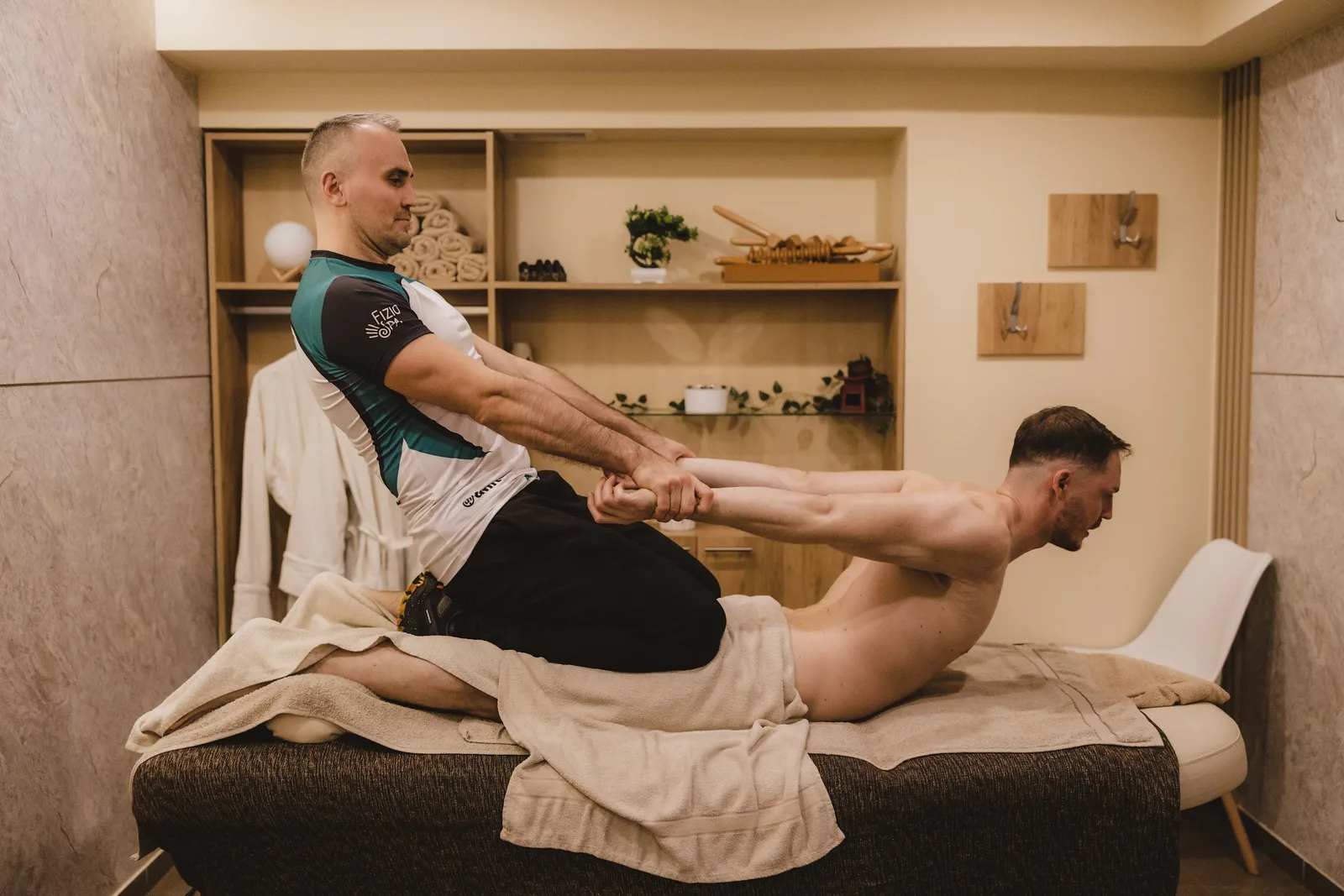
Tension and pain in the muscles after running are a sign that your body needs to recover. Regular sports massage boosts circulation, relaxes the calves and thighs and helps discomfort pass more quickly. If pain in your knee, heel or shin comes back after every run, it is not something you should “run off”. Come in for an assessment while the problem is still small.
Two to three times a week, with a rest day in between, gradually increasing the duration.
Before running, do a dynamic warm-up, and save static stretching for the end, when your muscles are warm.
An athletics track, followed by grass and packed dirt paths. Asphalt and concrete are harder, so a good shoe matters more on them.
If the pain goes away within a day or two, reduce how much you run. If it keeps coming back or gets worse, see a physiotherapist for an assessment.
Book a sports massage online, and you will get a confirmation by email straight away.
Book online